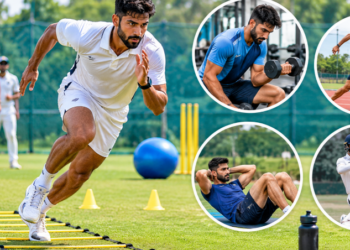








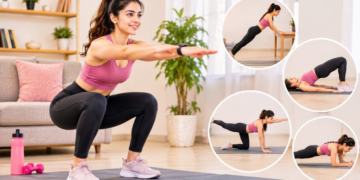



With just your body weight, you can begin strength training at home for beginners by picking five basic moves, training two or three days a week, resting between sessions, and adding reps or a slower pace each week as the exercises feel easier.
Most people picture heavy barbells and crowded gym floors when they hear the word strength. Your own body can supply plenty of effort when you are new. A beginner home workout also removes the usual hurdles: no membership fee, no commute, and no audience. In this guide, you will learn how this training works, five moves worth learning first, a four-week schedule, ways to make exercises harder, and the mistakes that slow beginners down.
Key Takeaways
- Two or three short sessions a week are enough to start building strength at home.
- Five simple moves cover your legs, hips, chest, back, and core in every single session.
- Learn clean form first, because good technique matters more than doing extra reps early on.
- Slowly increase the number of reps, the slowest rep, or pick a variation that is a bit more challenging.
- Rest days matter too, so leave at least one day between sessions to recover well.
Why Strength Training at Home for Beginners Works Without Equipment
When you are new, almost any challenge is enough to get stronger. Standing up from a chair or pushing your body away from a wall asks your muscles to work harder than they are used to, which signals them to adapt.
The CDC suggests that adults do strengthening activities on two or more days a week and work all the major muscle groups.
There is one honest limit. Without added load, building muscle size takes longer than it would with weights. If you have a medical condition or an injury, check with your doctor before you begin.
Set Up Your Space in Five Minutes
Clear an area about the size of a yoga mat and keep water and a timer nearby. A sturdy chair, wall, and table can act as your equipment. Warm up first with marching in place and arm circles.
Five Moves to Learn First

These bodyweight exercises train your legs, chest, back, and core without gear, so you can practice them anywhere.
1. Chair Squat
Sit back toward a chair until you lightly touch the seat, then stand by pushing through your heels.
2. Incline Push-Up
With a strong table or countertop, stand with your hands stationary, and back off in a straight line. In the process, bend forward until just above the surface, then push off.
3. Glute Bridge
Lie on your back, knees bent and feet flat. Push your feet together to raise your hips up and lower slowly.
4. Bird Dog
Start on hands and knees. Reach one arm forward and the opposite leg back, keeping your hips level. Return slowly and switch sides.
5. Forearm Plank
Rest on your forearms and toes, or on your knees if that feels better.
| Exercise | Sets | Reps or Time | Rest Between Sets |
| Chair Squat | 2 | 8 to 12 reps | 45 to 60 seconds |
| Incline Push-Up | 2 | 6 to 10 reps | 45 to 60 seconds |
| Glute Bridge | 2 | 10 to 12 reps | 45 to 60 seconds |
| Bird Dog | 2 | 6 to 8 per side | 45 to 60 seconds |
| Forearm Plank | 2 | 20 to 30 seconds | 45 to 60 seconds |
Use these numbers as a starting point, not a test. Next, here is how to spread them across your first four weeks.
Your First Four Weeks: A Simple Full-Body Strength Routine
A full-body strength routine trains every major area in one session, so you only need a few sessions each week. Space your days apart, such as Monday, Wednesday, and Friday.
| Week | Sessions | Sets per Move | Focus |
| 1 | 2 | 1 | Learn the form |
| 2 | 2 | 2 | Add the second set |
| 3 | 3 | 2 | Add a third day |
| 4 | 3 | 2 | Lower each rep slowly for three seconds |
By week four, the same moves should feel steadier. That is your cue to make them a little harder.
How to Make Exercises Harder Without Weights
When moves feel easy, pick one change from the list below and use it for a week before adding another.
- Slow the lowering phase to three seconds.
- Pause for a second at the hardest point.
- Add one or two reps per set.
- Choose a tougher variation, such as a lower surface for push-ups.
Mistakes That Slow Beginners Down
The most common mistake is training every day in the first two weeks. Soreness builds, motivation drops, and the habit breaks. Rushing through reps hides weak form, so slow down.
Sharp or sudden pain is a reason to stop and get advice from a healthcare professional. Pushing through it can set your progress back, so always listen to your body.
Conclusion
Good strength training at home for beginners does not need a big budget or a free afternoon. It needs a few reliable moves, a calendar you can keep, and the patience to build week by week. Five simple exercises, two or three short sessions, and a rest day between them are enough to build a base that carries into any training you try later.
Start with just one short session this week and treat the first month as practice. Focus on clean form, notice what feels easier by week four, and raise the challenge only when you are ready. If you want more simple, practical wellness guidance, Mystic Vida is a good place to keep learning.
FAQs
Can I do strength training at home without any equipment?
Yes. Squats, incline push-ups, glute bridges, and planks work with your body weight. As you get better, use everyday objects such as a chair, a wall or a backpack to add variety.
How many days a week should a beginner train?
In general, the beginner player is better served with 2 or 3 sessions per week and a rest day between each. This allows your muscles to recover and adapt.
How long should a home strength workout last?
Around 20 to 30 minutes is plenty when you are starting. A short warm-up, five moves, and brief rests fit comfortably inside that time and are easy to repeat.
Can bodyweight training really build muscle?
It can, especially for those who are new to resistance. This is done through slow repetition, additional repetition and difficult repetition, although progress might take longer than when weight is added.
Is muscle soreness normal after the first workouts?
Mild soreness for a day or two is common when you start. Sharp pain, swelling, or soreness that lingers is different, so stop and speak with a healthcare professional.
Ready to Start Your First Session?
Pick one day this week, clear a small space, and try the five moves above for one round each. Small steps repeated weekly lead to real progress, so begin today.