









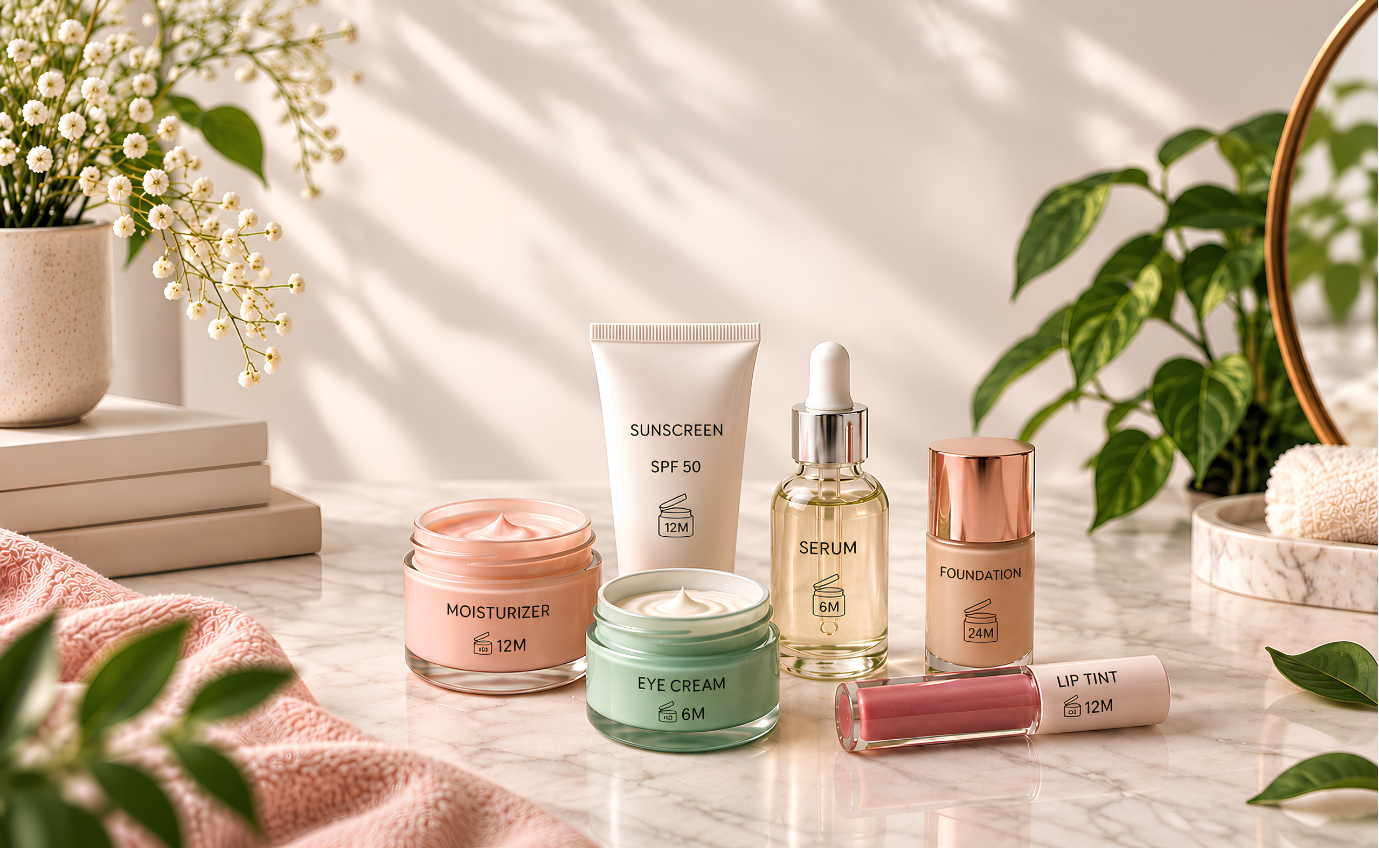
“You don’t need more products. You need to understand what’s already in them.”
Flip over any skincare bottle, and you’ll find a wall of names you can barely pronounce. Niacinamide, retinol, hyaluronic acid, and salicylic acid all blur together fast, and most of us end up buying based on packaging instead of what’s actually inside.
That’s where a little knowledge changes everything. Once you understand what each ingredient does, you stop guessing and start choosing products that genuinely work for your skin.
This guide walks through the ingredients dermatologists reach for again and again, what results you can realistically expect, and how to use them without irritating your skin. Think of it as a simple skincare ingredient guide you can actually apply, not just read.
Ingredients Do the Work, Packaging Just Sells the Story
A product can be labeled “glow-boosting” or “miracle repair” and still do very little. Packaging sells a feeling. Ingredients do the actual work.
Understanding what’s inside a formula helps you unlock the real skincare benefits you’re actually paying for:
- Avoid paying extra for a nice bottle with a weak formula
- Spot which product actually targets your specific concern
- Combine actives safely instead of layering things that cancel each other out
- Set realistic expectations for how long results take
Once you know this, shopping for skincare gets a lot less overwhelming.
Cheat Sheet: What to Use for What
Short on time? Scan this table to match your skin concern with the right ingredient in seconds, then jump to the section below for the full breakdown.
| Ingredient | Best For | What It Does | How Often |
| Hyaluronic Acid | Dehydrated, dry skin | Draws moisture into the skin | Daily, AM and PM |
| Niacinamide | Oily, acne-prone, uneven tone | Regulates oil, calms redness | Daily |
| Vitamin C | Dullness, dark spots | Brightens, fights free radicals | Morning |
| Retinol | Fine lines, texture, acne | Speeds cell turnover | 2–3x/week, build up |
| Salicylic Acid (BHA) | Oily, congested pores | Exfoliates inside the pore | 2–3x/week |
| Glycolic Acid (AHA) | Dullness, rough texture | Exfoliates the skin’s surface | 2–3x/week |
| Ceramides | All skin types, especially sensitive | Repairs the skin barrier | Daily |
| Peptides | Ageing, loss of firmness | Supports collagen production | Daily |
| Sunscreen (SPF) | Every skin type | Prevents UV damage and ageing | Daily, non-negotiable |
(Start slow with actives like retinol and acids. Your skin needs time to build tolerance.)
Breaking Down Each Ingredient, One at a Time
The table above gives you the shortlist. Here’s the reasoning behind each pick, including how to use it and what mistakes to avoid.
Hyaluronic Acid
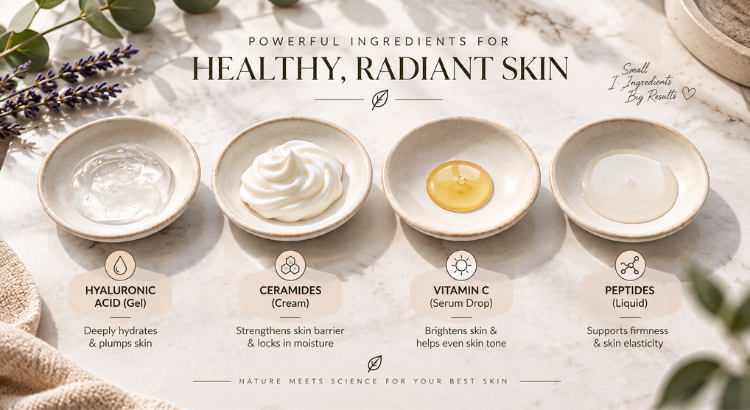
This is one of the gentlest ingredients for healthy skin, and it works for nearly every skin type, including oily and acne-prone. It holds up to a thousand times its weight in water, pulling moisture into the surface layers.
Apply it to slightly damp skin and seal it with a moisturiser. Used on completely dry skin, it can actually pull moisture out instead of in.
Niacinamide
Few ingredients multitask this well. Niacinamide calms inflammation, minimises the look of pores, and helps balance oil production, which makes it a favourite across nearly every skin type.
It also plays well with nearly everything else in your routine, so it’s a safe place to start if you’re new to actives.
Vitamin C
If dullness or dark spots are your concern, this is one of the best skincare ingredients for brightening. It neutralises free radicals from sun exposure and pollution while gently fading uneven tone over time.
Use it in the morning, under sunscreen, for the best protective effect.
If you’re interested in seeing how these ingredients are used in real skincare products, you can also read our Mamaearth skincare review, which looks at several Mamaearth products and their key ingredients.
Retinol
Retinol is the ingredient most dermatologists recommend for visible ageing, texture, and acne, but it’s also the one people misuse most often. Starting too strong, too fast, is the number one reason people give up on it.
Begin with two to three nights a week, always follow with moisturiser, and never skip SPF the next morning. Retinol makes skin more sun-sensitive.
Salicylic Acid and Glycolic Acid
These two are the most talked-about active skincare ingredients for exfoliation, but they work differently. Salicylic acid is oil-soluble, so it gets inside the pore to clear congestion, making it ideal for oily and acne-prone skin. Glycolic acid works on the surface, smoothing texture and brightening tone.
Using both in the same routine, every day, is a fast track to a damaged skin barrier. Pick one, and space out other actives around it.
Ceramides
Ceramides don’t get the spotlight the way retinol or vitamin C do, but they matter just as much. They rebuild the skin’s natural barrier, which is what keeps moisture in and irritants out.
If your skin feels tight, flaky, or reactive to everything, a ceramide-rich moisturiser is often the fix, not another active ingredient.
Peptides
Peptides are short chains of amino acids that signal your skin to produce more collagen. The benefits show up gradually, over weeks rather than days, but they’re one of the gentler options for anyone concerned about firmness and fine lines.
They layer well with almost anything, including retinol and vitamin C.
Sunscreen
No skincare routine is complete without this one, because it’s the ingredient that protects the results of everything else. Retinol, vitamin C, and acids all work harder and safer when UV damage isn’t undoing the progress at the same time.
A broad-spectrum SPF 30 or higher, every single morning, is the one non-negotiable step in this entire guide.
If you’re also exploring long-lasting makeup options, check out our guide to the best waterproof and long-lasting lipsticks in India for options that can complement your everyday beauty routine.
Mixing Actives Without Wrecking Your Skin Barrier
Not every ingredient plays nicely together. Use this quick checklist before adding something new:
- Introduce one active at a time. Give your skin two to three weeks before judging results or adding another.
- Separate strong exfoliants. Don’t use retinol and acids (AHA/BHA) on the same night.
- Buffer sensitive skin. Apply a moisturiser before or after an active if it stings or feels tight.
- Always follow actives with SPF. Most actives increase sun sensitivity.
- Patch test anything new. A small area on your jaw or inner arm tells you a lot before your whole face does.
A Simple Rule: If your skin is red, flaky, or stinging, that’s not “purging.” That’s irritation. Scale back.
Less Is Often More
You don’t need a ten-step routine or every ingredient on this list to see real change. Pick one or two that actually target your concern, use them consistently, and give your skin time to respond.
It’s also important to know when a makeup product is no longer safe to use. Changes in texture, smell, colour, or performance can indicate that waterproof makeup has expired. Learn more about the signs your waterproof makeup has expired and when it’s time to replace it.
Understanding ingredients turns skincare from guesswork into something you can actually control. No trends required, just a little knowledge and patience.
Want more honest breakdowns like this? Explore our Beauty section and follow us so you never miss a new guide.
Keep in Touch!
Be the first to know about new product launches, tutorials, events and all things Eldridge.